Conquering my nemesis climb: Hardknott Pass
It has taken cycling YouTuber Katie Kookaburra THREE years to finally conquer the infamous Hardknott Pass. The steepest road in England with excruciating gradients of 33%. Here, she tells us how she finally conquered her nemesis climb.

Why would anyone think to tarmac this?
Conquering my nemesis climb is the story of how Cycling YouTuber and self-confessed hill lover, Katie Kookaburra finally conquered the dreaded Hardknott Pass. Here she tells us about the day she finally rode it - after three previous failed attempts.
Hardknott Pass. If you’re into cycling and climbing hills you will probably have heard of it. If not, let me paint the picture. It’s the steepest climb in England, with sections of 33%. Yes, 33% of angled asphalt. It’s an absolute beast of a climb. It also is one of the final climbs on the brutally infamous Fred Whitton sportive.
This hill pass situated between Eskdale and the Duddon Valley in the Lake District has defeated many cyclists. Myself included, and I’m a self-confessed lover of climbing hills and pushing myself to the limit. But that limit was reached and its name... Hardknott Pass. At 2.2km long, averaging 13% and with sections of more than 30%, it’s a killer of a climb.
Three times over the past three years I’ve attempted it, each time my foot unclipped and hit that steep tarmac. Once unclipped on those gradients it is simply game over. It’s not really about the power needed to get up there. It's about the pure agility required to keep the bike at the right angle to stop it from tipping up. If you’re too far back the front wheel pops up and if you're too far forward, the back wheel struggles for traction.

Some cracking views.
So after making it my 2020 goal to get up this beast, Monday was the day. The Endurance SL was loaded into the back of the car and off I went, ready to have a go at this climb once again. I spent a fair amount of time on VeloViewer, studying each section. I also watched videos on YouTube, just so I knew what was to come again.
So, a quick half-hour warm-up and off we went to tackle the beast. It was pretty unnerving seeing the 30% signs warning drivers of larger vehicles not to proceed any further. And to avoid heading onto the tiny sliver of a road that literally passes over mountains. But I just had to get my head down and crack on.

There’s no way to ease yourself into the climb. You’re immediately at 25% for the first few hundred metres into the climb. You hit the first switchback, which is steep and at that point, I know it’s only going to get steeper. So head down, out of the saddle and pushing on those pedals. The severity of the slope isn’t the only difficult thing about the climb, the road surface isn’t great either. There are a fair few huge potholes to dodge as well as plenty of uneven surfaces as you hit the steepest sections.

Steep. Steeper. And then it gets even steeper.
But if you take the right line, it’s doable. Also, as steep as it is, cars, vans, and even motorhomes still decide that is the route for them to take. So be prepared to meet a car head-on as you push yourself up this single track road. When I rode it, drivers were so kind and pulled over to let us pass.
I think they can see the pain and determination on my face. I even got clapped by two families in cars as I made my way up there.
Light, stiff and responsive is what you need on a climb like that and it performed in every way possible
Katie Kookaburra
The middle section feels flat - but still hits around 8%. However, it’s not long before yet another switchback and this time the steepest section. It’s where cyclists tend to lose their bottle and stop. It's also where a lot of cars grind to a halt too. The wall of the bend simply makes it look almost impossible to climb. All I was hoping for in this section was that the road would be clear. Clear enough that I could take the outer corner where the gradient is a little more kind. As I approached, my fears were realised as I saw a car approaching.
I looked up and gave the best smile I could through the grimacing, and they were so nice in pulling over to let me go. As I now had an audience, I couldn't stop and pushed my way up. That corner done, there was only one more mega steep section between me and the top of the climb. At this point, my legs felt battered!

This was a second time up to get pics, hence why I'm smiling. I wasn't smiling the first time up.
But, there wasn’t any time for recovery before hitting said steep section. As I mentioned before, the trick of getting up these steep climbs is distributing the weight in a way that keeps the bike upright. However, by this point, my legs didn’t have the strength to get me out of the saddle. My front wheel came off the floor no less than three times. So I pushed down as hard as I could on the bars and grimaced my way to the kinder gradients nearer the summit. In my head, I knew I had done the worst of it and that all I had to do now was suffer the final few hundred metres.
And as cyclists, we somehow are good at that aren’t we.... suffering? It seems to be our indicator of a ‘good ride’ if it’s been a tough one.

A climbing beast: Endurance SL rim brake.
So, I pushed on and as I got nearer and nearer to the crest of that climb, I knew I had done it. Three years! Literally, three years it had taken, of climbing hills, building my confidence, all to be able to conquer my nemesis climb.
When I got off the bike, which I have to add was its maiden voyage up that brute had handled perfectly. Light, stiff and responsive is what you need on a climb like that and it performed in every way possible.

Aaaaaaaand relax.
I’m sure there are many riders out there who have ridden this climb first time, no worries. But me, I'm not a natural climber. I started off cycling at around 100kg. My first 5km climb took me around 2 hours. But I stuck at it, I lost weight, got faster, climbed for longer and took on steeper hills.
This climb, and finally being able to ride it felt like the last piece of the puzzle for me. To feel like I had done what I set out to do. Without wanting to sound like a cliche, whatever you want to do in cycling, whether it’s your first 100km, 100 miles, audax, bike-packing event or solo ride, just keep showing up and working towards your goal.
I know it feels so much better knowing it took me literally three years of riding. 40,000km ridden, to be able to climb to the top of that absolute shocker of a climb. It wouldn’t have meant the same if I had breezed up it the first time, right?
Here's the video if you want to see more of Harknott in its steep glory.
https://www.youtube.com/watch?v=1N--Hd01d9o
Also, if you want to look at the Endurance SL in more detail click HERE.
Our Real.Bike.People series places the focus squarely on Ribble bike owners, with the spotlight this time being on the Parkinson Family. Read their story here.
We asked the Ribble crew to share their top tips for commuting into work throughout the seasons. To find out all the tricks of the trade click here.

Titanium Bike Buying Guide: How to Choose
Compare Ribble's titanium road, gravel and CGR bikes. Learn the differences between each model and find the right titanium bike for your riding style.
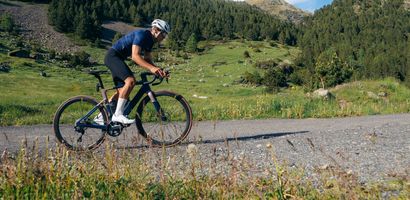
Electric Bike Buying Guide 2026
Not sure which electric bike to choose? This guide compares E-Road, E-Gravel and E-Hybrid bikes to help you decide.
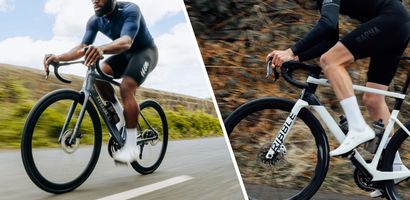
ULTRA-ROAD vs ULTRA-RACE: Which One Is Right For You?
Two bikes, one range, two different kinds of fast. We take a look at the ULTRA-ROAD and ULTRA-RACE to help you decide which is the right bike for you.
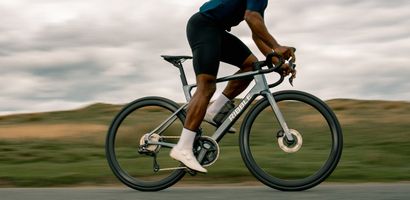
Why Your Race Bike Might Be Making You Slower
A longer, lower, more aggressive position means faster right? Not always. We take a look at the reality of performance that's sustainable.
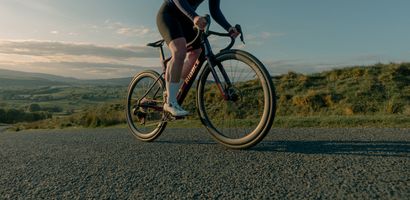
How We Built ULTRA-ROAD: Behind The Design
We take a look at the design of the ULTRA-ROAD. Not a comfort bike, or a softer alternative to a race bike, but a performance road bike designed around the way most riders actually ride.
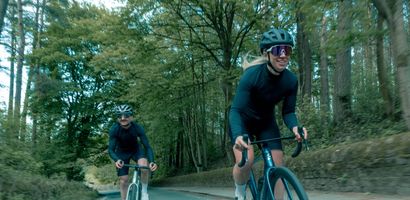
Everything You Need to Know About the ALLROAD CARBON
The ALLROAD CARBON takes everything riders already loved about the ALLROAD SL and refines it for the way modern road riding actually looks. Lighter, smoother and more capable across rough roads, long rides and changing conditions, it is built to keep going when the tarmac stops being perfect.
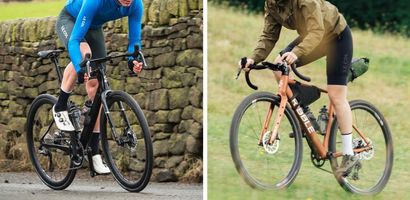
Gravel Bike vs Road Bike: How to Choose
Gravel bike or road bike? One's built for speed, the other for versatility, but the right choice comes down to how and where you ride. Here's how to decide.
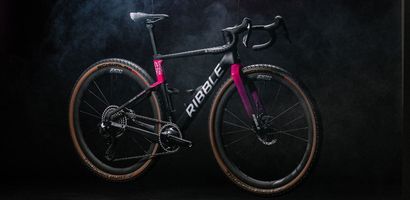
Built for the Margins: Sophie Wright’s Ultra-Grit Special Edition
At the sharp end of racing, the difference is made in the fine margins. Sophie Wright’s ULTRA-GRIT Special Edition is built for those margins. A one-off race bike built by our development team to be lighter, more focused and stripped back to what matters.
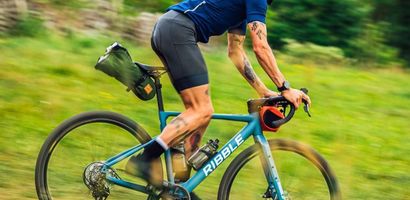
Best Gravel Bikes 2026
What actually makes ‘the best’ gravel bike in 2026? A clear guide to choosing the best bike for how you actually ride.
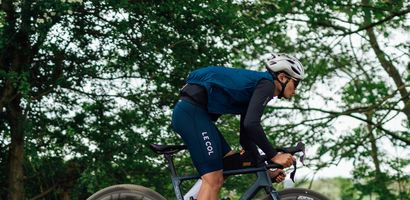
What is a Gravel Bike?
Gravel bikes are changing how people ride. Sitting right in the middle of road and off-road, they're fast on tarmac and stable on loose ground. Comfortable over long distances and ready for whatever the ride throws at you.
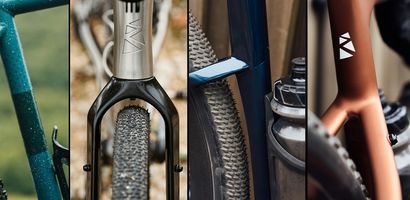
Gravel Bikes - Which frame material is right for you?
More cyclists than ever are seizing the opportunity to take their rides off-piste in search of freedom and adventure. But to do so, you need the right tool for the job - a gravel bike. The Ribble gravel range consists of four frame materials. Each of these offers something a little different in terms of ride quality, longevity and performance characteristics. So how do you decide which frame material is right for you?
Tyre Choice and Pressures for UK Gravel
Tyres can make or break your gravel ride. This blog cuts through the guesswork on width, tread and pressure, showing you what actually works for UK conditions.