Why should you choose an Endurance or Sportive bike?
Endurance or sportive-specific bikes might not look especially different from a regular racer, but there are subtle differences in their geometry which benefit the non-racing cyclist. The typical endurance bike frame has a more relaxed geometry, making it more comfortable when spending long periods of time in the saddle. The relaxed geometry makes a longer wheelbase for stability and comfort, while bringing the handlebars closer and higher so the rider is in a less extended or aggressive position. The difference in the geometry of these bikes compared to a bike designed for racing are quite subtle, but if you really want to get into the detail here goes...
Frame geometry: the heart of a bike
Geometry is at the heart of the frame design of every bike but how many riders actually have a full understanding of what it relates to? Geometry is a branch of mathematics concerned with questions of shape, size, relative position of figures, and the properties of space……and angles lots of angles!
(This is a frame in all its glory)

Let us break down the detail for you…
Head tube angle
 At the front end of the frame is the head tube and fork. Head Tube Angle - The head tube angle on an endurance bike is 'slacker' allowing for easy handling and producing a longer wheelbase (more of that later). A racier bike with a steeper head angle has faster steering and, if very steep, might be referred to as twitchy. Fork Rake (or Offset) - Increasing the fork rake makes steering faster.
Chainstay length
A longer chainstay length will increase the wheelbase (making the bike more stable at speed) simple… Which leads me onto. 
Wheelbase
A longer wheelbase provides a more stable and comfortable ride. Makes sense right? 
Bottom bracket drop
 Bottom bracket drop determines how high your cranks sit from the ground when you pedal. A lower bottom bracket results in a lower saddle height and therefore a lower centre of gravity.
Seat tube angle
Seat tube angles don’t differ a lot between all styles bicycles of the same size. This is because optimal pedaling positions aren’t too different between bikes. The more upright models (taller head tube) will offer a slacker seat tube angle to match your less rotated pelvis.
Seat tube length
 Seat tube length isn’t too important for most people with the exception of those who need additional stand over clearance (often smaller riders). Again, it’s best to compare bikes based on their stack and reach measurements if you can.
Head tube length
Long head tubes are common on more comfortable geometry bikes in order to prop the bars up high without the use of excessive headset spacing. Head tubes are often 40mm+ longer than the equivalent road or cyclocross bike for optimum comfort with regards to reach and hip angle.
Stack and reach: comparing bikes
Stack and reach measurements are the best information we have to know if a bike will fit us, without test riding it first. These measurements assess the virtual position of the headtube in relation to the bottom bracket, essentially standardising bike geometry/sizing between brands and models. This is important because bikes from two manufacturers that are both called the same size (eg. medium or 54cm) can actually fit up to 2cm (a full size) different from one another. You can get a professional bicycle fitter to determine your appropriate stack and reach, making it much easier to find a perfectly fitting bike. Alternatively, you can measure up a bike you’re comfortable riding with a tape measure to find out its stack/reach.
So what does this all mean?
Take our Ribble Sportive Racing as an example, the endurance geometry of the Sportive Racing gives riders a more relaxed and upright riding position that is ideally suited to those longer days in the saddle. Complimentary aspects of this smart frame design are performance focused and make this bike fast as well as comfort-orientated.
How?
Simple, take what we know about the geometry required to build a fast and aggressive race bike and blend it with what we know making a good sportive endurance geometry and blend them at the relevant points to give the best of both rides without compromise. Keep the wheelbase long enough to retain the comfort but retain the sharpness, don’t let the head angle out too far and raise the head tube ever so slightly over the typical lower race geometry… Oh and keep the chain-stay from being too long to again avoid making that wheel base too long so it’s nice and stiff out the saddle and responsive for the club coffee sprint!
Let’s summarise
So you can still have a bike that you can sit and ride on all day in comfort but also have a bike that can perform when you need it to…. Sportive geometry. 
 Written by Ashley Brough - Triathlete, CrossFit King, Ribble Mailbox Store Manager and Super Dad to Lola!

Autumn Cycling Tips
5 Autumn Cycling Tips Every Rider Should Know. Nights are creeping in. Roads are slicker. The kit that saw you through summer might not cut it now. But autumn doesn’t have to mean fewer miles. With a few smart changes, you can keep the pedals turning right through to winter.
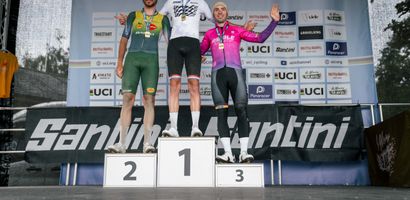
A Solo Win in Wales and a Season Closed Out in the Ardennes
The Ribble Outliers delivered another standout weekend of gravel racing across Wales and Belgium. Jenson Young claimed an unforgettable solo victory at UCI Gravel Cymru, with Abi Smith taking second and Ben Thomas completing the podium in third. Meanwhile, Sophie Wright closed out her Gravel Earth Series campaign in the Ardennes, securing seventh overall after a season of victories, podiums and a national title. Every result was earned aboard the Ribble ULTRA-GRIT.
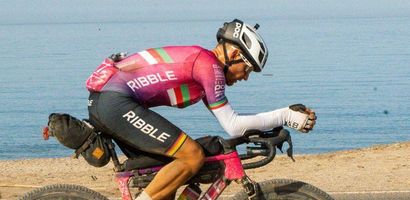
43 hours in Andalusia - Metheven Bond Rides to 6th at Badlands
817km, 14,420m of climbing, two nights without sleep and barely an hour off the bike. Metheven Bond's Badlands is one of the rides of our season.
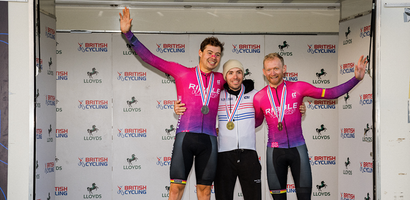
We Came, We Saw, We Conquered.
All four elite national jerseys, a medal for every rider, and a comeback story six weeks in the making. This is how the first ever official British Gravel Championships went for the Ribble Outliers.
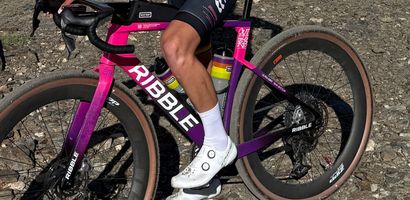
Back From Altitude
Jenson Young has spent the biggest training block of his season on his own in the Sierra Nevada. He flies home on Monday with Nationals and the Europeans to come.

Leila Gschwentner solos to victory
Smurfit Westrock Cycling Team rider Leila Gschwentner delivered a brilliant solo victory at the 2026 Arlberg Giro Criterium in Austria.

Jenson Young Takes on the London Orbital Gravel Route
His goal? Chase down the 2 GCN presenters Si Richardson and Alex Paton who started the same route with a 90-minute head start.
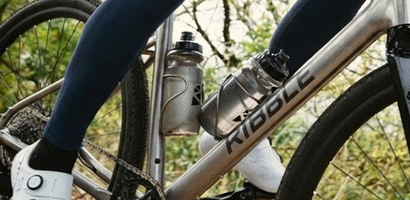
Titanium Bike Buying Guide: How to Choose
Compare Ribble's titanium road, gravel and CGR bikes. Learn the differences between each model and find the right titanium bike for your riding style.
E-Bike Positive - The Industry's New Safety Trust Mark
Can you tell a legal e-bike from an illegal one? Over 80% of people surveyed don't know the difference.

Electric Bike Buying Guide 2026
Not sure which electric bike to choose? This guide compares E-Road, E-Gravel and E-Hybrid bikes to help you decide.
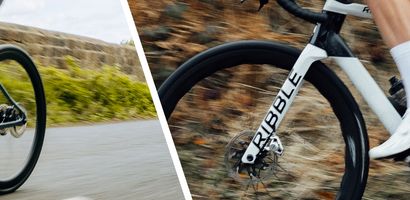
ULTRA-ROAD vs ULTRA-RACE: Which One Is Right For You?
Two bikes, one range, two different kinds of fast. We take a look at the ULTRA-ROAD and ULTRA-RACE to help you decide which is the right bike for you.
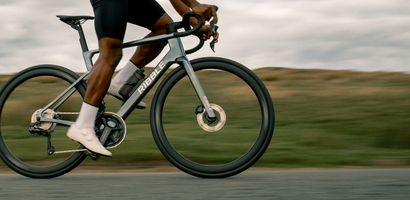
Why Your Race Bike Might Be Making You Slower
A longer, lower, more aggressive position means faster right? Not always. We take a look at the reality of performance that's sustainable.