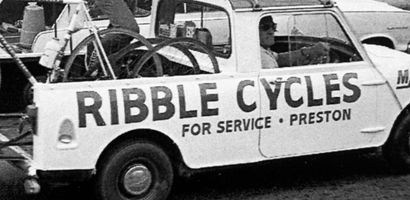
For more than 125 years, Ribble has been building bikes with one goal in mind: helping riders get more from every ride.
Founded in Preston in 1897, our story has followed the evolution of cycling itself. From handcrafted steel frames built in a small workshop to today's award-winning road, gravel, electric and titanium bikes, we've never stood still.
Materials have changed. Technology has evolved. The way people buy bikes has transformed.
What hasn't changed is our belief that great bikes should be built around the people who ride them.
Whether you're lining up for a race, taking the long way home or simply riding because you love it, every Ribble is designed with the same purpose: to help you ride better
A Bike Brand is Born
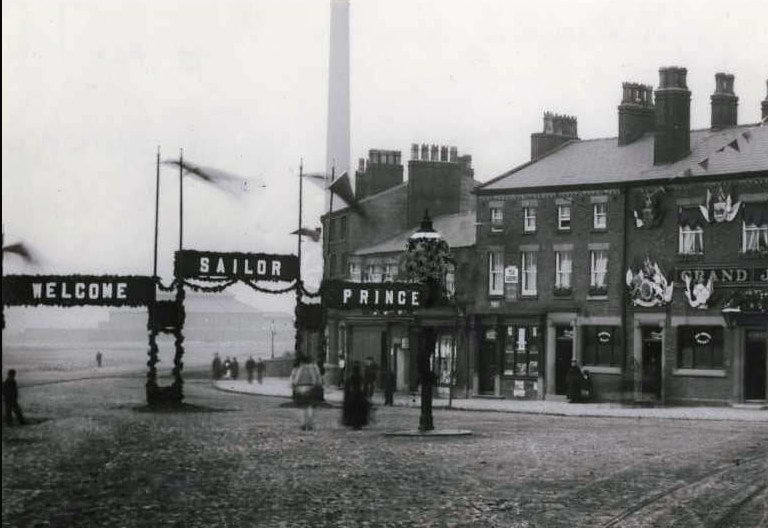
Ribble's story began in Preston at a time when cycling was changing the way people travelled.
In 1897, as the safety bicycle replaced the penny-farthing and cycling became more accessible than ever, a small workshop on Water Lane began hand-building steel bicycle frames for local riders.
It was a simple beginning, but one that established the principles that continue to guide Ribble today: thoughtful design, quality craftsmanship and a genuine passion for riding.
The name came from the River Ribble, which winds through Lancashire and some of Britain's finest cycling roads before reaching the Irish Sea. More than a century later, those roots still matter. Preston remains home to Ribble, and the roads that shaped the brand continue to inspire the bikes we build today.
Above Image: The Strand Road and Water Lane junction in Preston, photographed in 1885. Ribble opened next door to the Grand Junction public house just twelve years later. Image courtesy of the Preston Digital Archive.
Ribble into the 20th Century
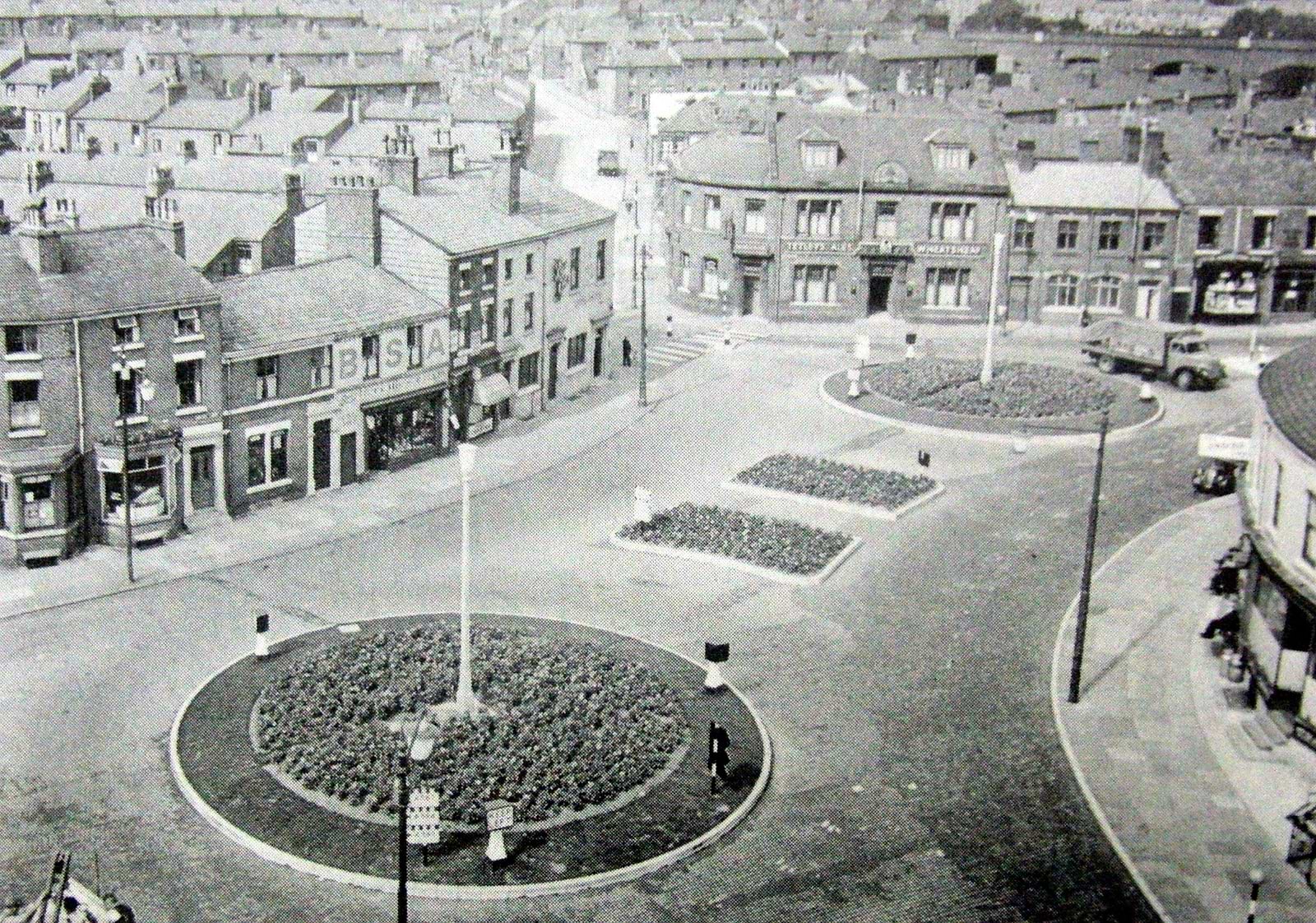
Above Image: The Ribble Cycles showroom (BSA sign on the shop front) on the Strand Road/Water Lane junction circa 1949. Image courtesy of the Prestion Digital Archive.
As cycling continued to grow in popularity, so did Ribble.
By 1913, the business had become a well-established family company, producing handcrafted steel frames for riders across Britain. In 1949, ownership passed to the Sandiford family, who continued building on the reputation Ribble had earned for quality, service and value.
Under Hughie "The Cycle King" Sandiford, Ribble became a familiar name throughout the North of England. His passion for cycling, combined with a genuine commitment to looking after customers, helped establish the values that still define the brand today.
Ribble's growing reputation soon reached beyond everyday riders. In 1956, the brand was named official bicycle supplier to the British Olympic cycling team, beginning a relationship with competitive cycling that continues today.
The image below captures another important moment in that journey. During the 1970 Milk Race, then Britain's biggest stage race, Ribble supplied bikes and technical support to the England team, reinforcing a reputation built not only in workshops, but out on the road.
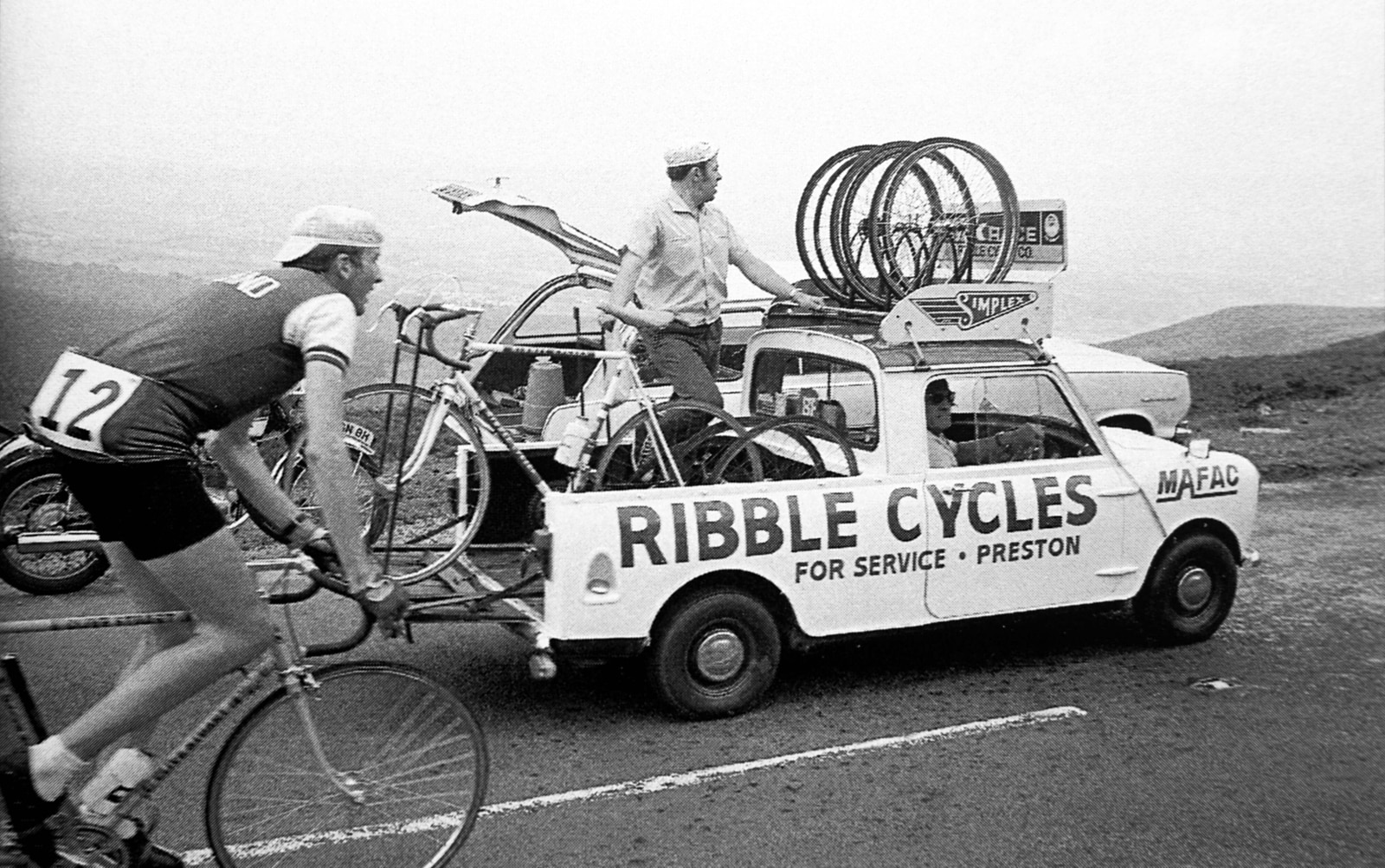
Above Image: Stage 10 of the 1970 Milk Race (Malvern to Porthcawl); Team England's Phil Griffiths rides alongside the Ribble Service vehicle.
The Beginning of a New Era
When Ribble entered a new chapter in 1985, cycling was changing once again.
As one of the earliest direct-to-consumer brands in the industry, Ribble took a different approach. Instead of relying solely on traditional bike shops, riders could browse the pages of Cycling Weekly, place an order over the phone and have a bike delivered directly to them.
It was a simple idea that helped make performance bikes more accessible to more riders. It's an approach that still shapes Ribble today.
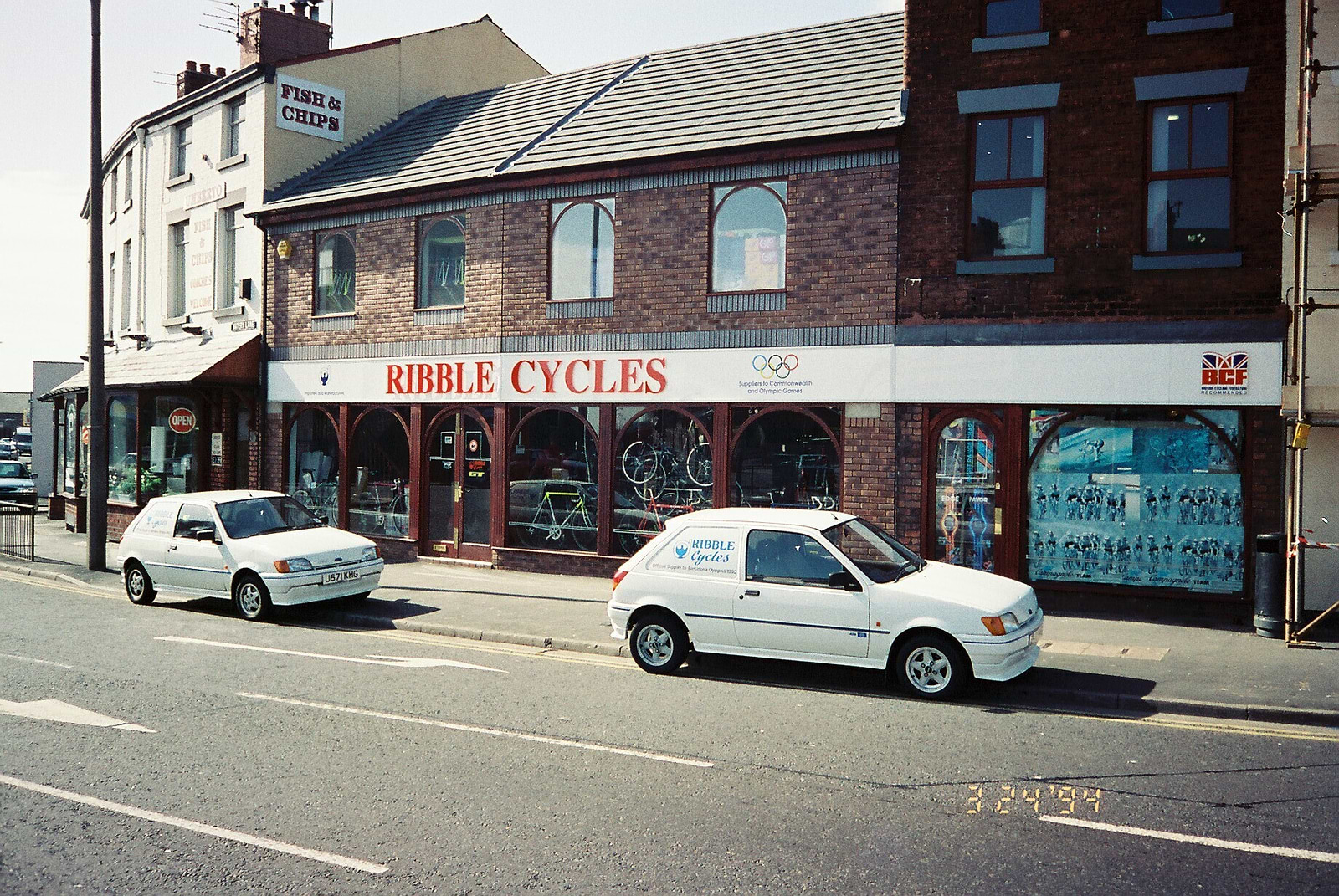
Above Image: Ribble Cycles shop, Water Lane, Preston circa 1994. Only three years shy of celebrating its centennial! The Olympic symbol on the shop front reflects Ribble's sponsorship of the GB Olympic team two years prior.
Into the new Millenium
The 1990s brought one of the biggest shifts cycling had ever seen.
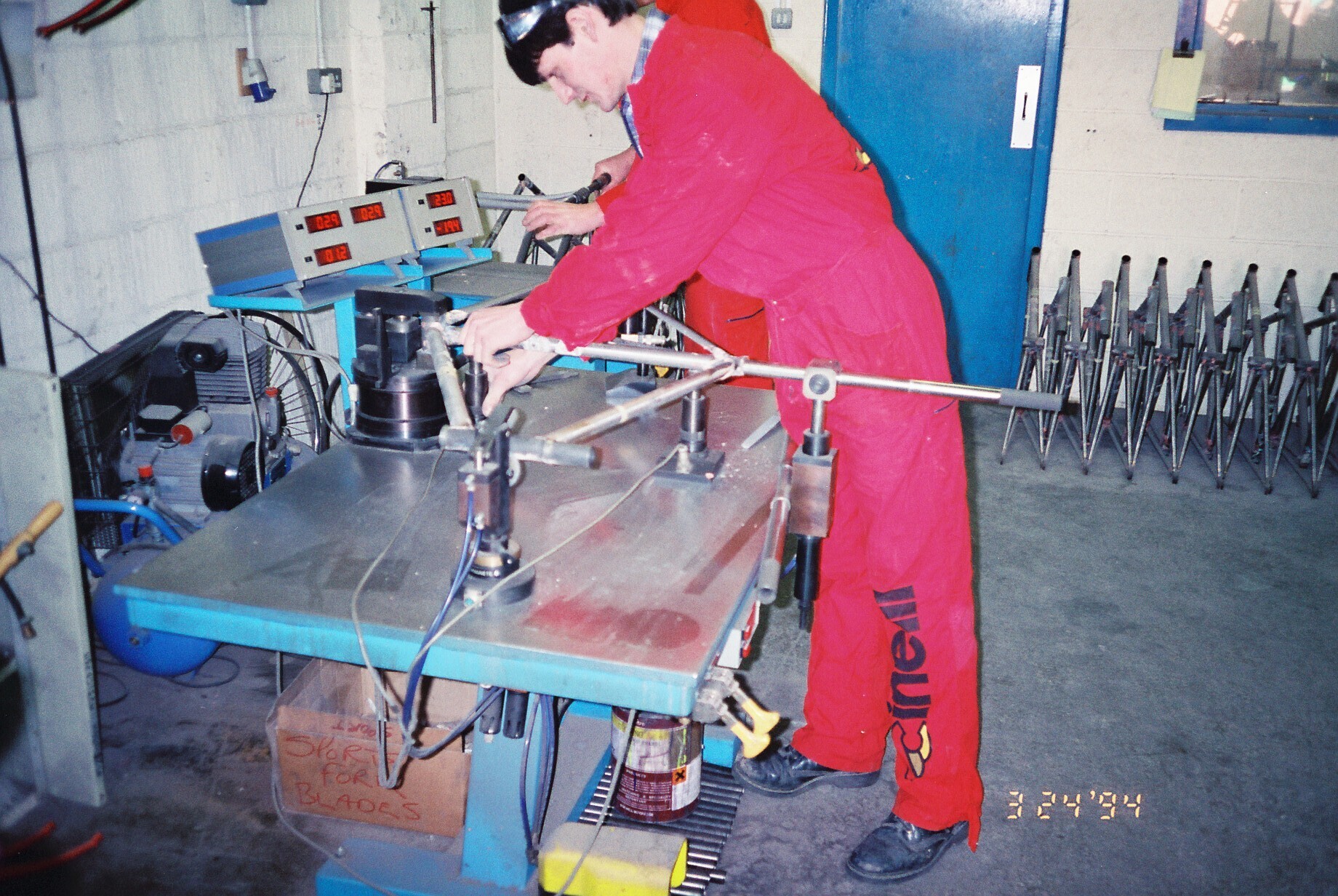
Steel remained at the heart of the sport, but aluminium and carbon were opening the door to lighter, faster and more capable bikes. Rather than stand still, Ribble evolved alongside the riders it served, embracing new materials while keeping the same focus on performance and value.
As demand grew, so did the business. Ribble outgrew its mail-order premises in Kirkham and moved to its current home on the outskirts of Preston, creating the space to design, develop and build the next generation of bikes.
During this period, one bike came to define the brand.
The 7005 Audax became a favourite with club riders across Britain. Reliable, versatile and built for long miles, it earned a reputation as the bike that could do a bit of everything- from winter training and commuting to weekend sportives. Long before "all-road" became part of cycling's vocabulary, the Audax had already shown what a truly versatile bike could be.
Racing has long played an important role in the development of Ribble bikes.
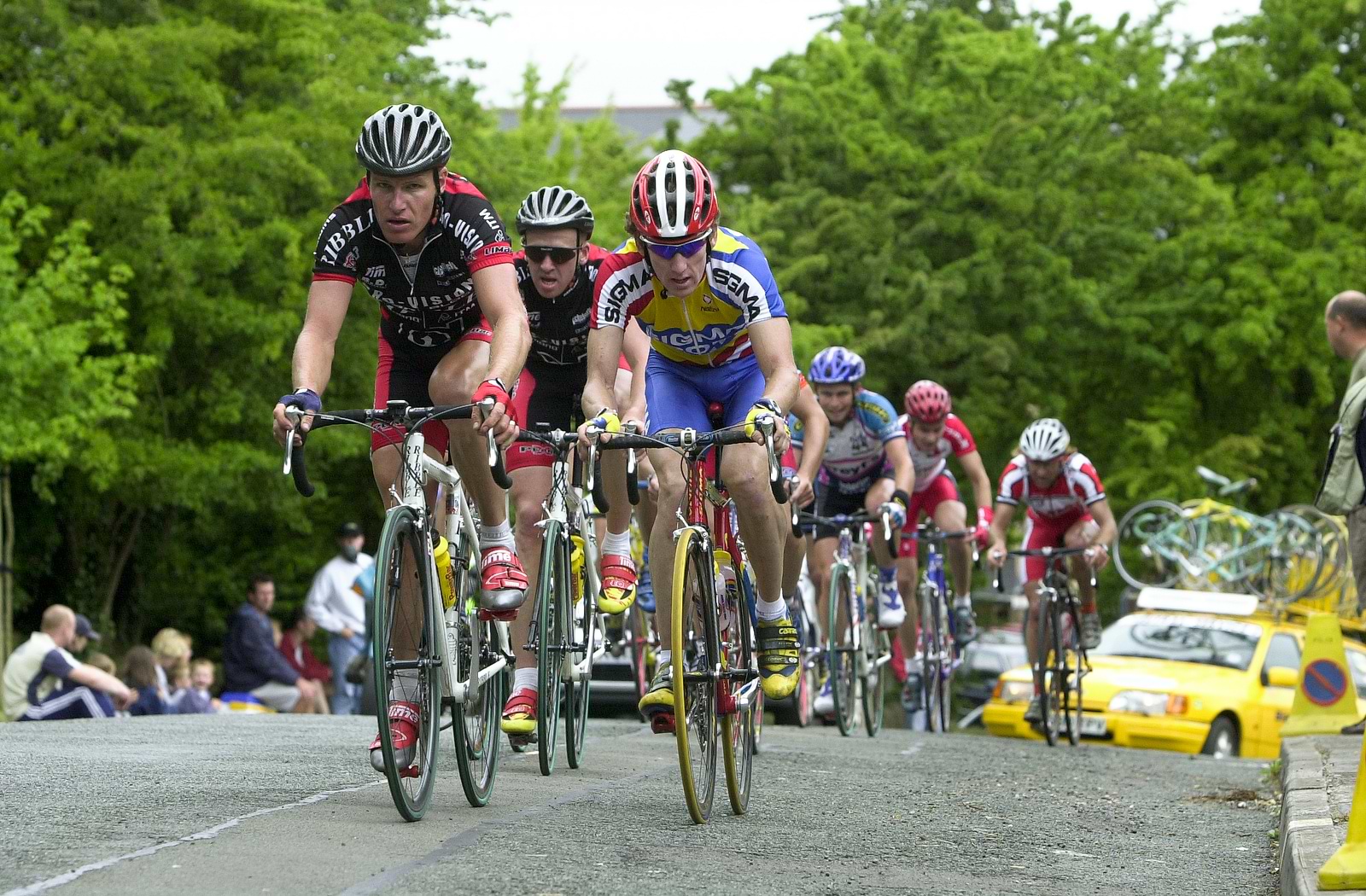
In 2001, Ribble sponsored the Ribble Pro Vision team throughout the Premier Calendar season, supporting some of Britain's strongest domestic riders. Success followed quickly, with John Tanner winning the overall series and teammate Mark Lovatt finishing runner-up.
But the value of racing has always gone beyond results.
Competition provides the ultimate proving ground, helping shape the bikes we build and the ideas that eventually reach every rider.
Above Image: John Tanner leads the pack, with teammate Mark Lovatt sat in third aboard their Ribble SC.61.10A Scandium alloy team bikes.
Ribble Today
The Ribble of today has been shaped by more than a century of continuous evolution.
While the bikes have changed dramatically, the philosophy remains remarkably familiar: build performance bikes that riders genuinely want to own, ride and recommend.
That means combining modern engineering, advanced materials and thoughtful design to create bikes that perform where it matters most - on the road, on the trail and in the real world.
Every rider is different, which is why choice remains a key part of the Ribble experience. Through BikeBuilder, riders can tailor the specification of their bike before it's built, while CustomColour offers the freedom to create something uniquely their own.
Because the best bike isn't simply the fastest or the lightest.
It's the one that's right for the rider.